Memoir Writing I
GUIDE TO NONFICTION COURSES

Memoir Writing I is a 10-week workshop, which includes lectures, exercises, and the critiquing of student projects. It’s for beginners or anyone who wants to brush up on the fundamentals. Farther down, you can view a syllabus for this course.
Every life holds many tales. Whether your life is wildly unconventional or relatively normal, there’s bound to be something fascinating about it. That’s why the contemporary memoir—everyday people telling their stories—has become such a popular phenomenon. A memoir covers an aspect of a life, whether it’s a short piece about, say, a bicycle ride with a friend, or a book about, say, your entire childhood.
To make readers care, your memoir must be told with the finesse of fiction. Here you’ll learn techniques for focusing your life stories, as well as writing craft and how to market your work.
Whether you seek to write essay-length pieces or a book, we’ll show you how to best tell the stories from your life.

Wonderful introduction to memoir writing with explanatory lectures and exercises that build skills.
Lisa Gilbert
architect
Notes
A memoir is similar to a personal essay; both incorporate elements from the writer’s life. But a personal essay focuses more on the viewpoint, and a memoir focuses more on the story. Gotham also offers courses on Essay & Opinion Writing and an Intensive on Personal Essay Writing.
Upcoming Classes
-
Class Full. Join wait list.
-
10-Week
-
Zoom
Real-time videoconference
Tuition: $464 (returning students: $434)
-
NYC
In-person
Tuition: $490 (returning students: $460)
-
Online
Anytime, week-long sessions
Tuition: $464 (returning students: $434)
-
One-on-One
Tuition: $1895
Syllabus
This course gives you a firm grounding in the basics of memoir craft and gets you writing a short memoir (or two) or a book. Course components:
Lectures
Writing exercises
Workshopping of student projects (each student presenting work two times)
New York City/Zoom classes
The syllabus varies from teacher to teacher, term to term. Many topics will be similar to those covered in the Online classes.
Online classes
Week 1
Introduction to Memoir: The contemporary memoir defined. Short and long memoirs. Finding the “who cares?” in your story. Focusing on an aspect of your life. Types of memoirs—coming of age, adversity, relationship, career, travel.
Week 2
Mining Your Memory: How “true” must it be? Researching your past. The balance of being “actor” and “observer.” Not using memoir as therapy. Facing the truth.
Week 3
Character: Thinking of real people as characters. Making characters dimensional through desire and contrasts. Creating character profiles. Showing vs. Telling. Methods for showing characters.
Week 4
Plot: Finding a major dramatic question. Shaping a beginning, middle, and end. The difference between short and long plots. Pros and cons of outlining.
Week 5
Description: Using the senses. Specificity. Techniques for creativity. Finding the right words. Merging description with point of view.
Week 6
Dialogue: The importance of scene. Turning real life conversations into dialogue. Quotation marks and tags. Stage directions. Summarized dialogue. Characterization through dialogue. Subtext.
Week 7
Point of View/Voice: Point of view defined. First person and other memoir alternatives. Voice defined. Exploration of the various types of voice. Tips for finding your voice.
Week 8
Setting/Pacing: Creating setting through time, place, and weather. Description of setting. Mood and emotion of setting. How to manipulate time through pacing. Flashbacks.
Week 9
Theme/Revision: Theme defined. Types of theme. Weaving theme into a story. Exploration of the various stages of revision.
Week 10
The Business: Proper format for manuscripts. How to target publishing houses, literary magazines, and agents. How to send your work out. Query letters.
Note: Content may vary among individual classes.
Teachers

A. Hansen Miller
A. Hansen Miller has published essays, articles, and poems in the New York Times, Line of Advance, Columbia Journal, Salt Hill Journal, Raffish, and the Journal of Military Experience, and been anthologized in The Weight of My Armor (Parlor Press). His essay “Threads of Fiction” was adapted into the short film Solemn Return. Formerly he was an editor for the Syracuse Peace Council Newsletter, the nonfiction editor of the Journal of Military Experience, and the online managing editor of Columbia Journal. He served as an artillery officer in the US Army overseas in South Korea and Afghanistan, deployed to Afghanistan a second time as a military intelligence officer, and was honorably discharged at the rank of captain. He is a cofounder and board member of the Ivy League Veterans Council, a cofounder of the Charlotte Veterans Writing Group, a cofounder of the Moral Injury Project at Syracuse University, and a former group leader of the Syracuse Veterans Writing Group. He holds a BA from Illinois Wesleyan University and an MFA in creative nonfiction from Columbia University.
Read more
Carmen Bugan
Carmen Bugan is the author of the memoir Burying the Typewriter (Picador), the essay collection Poetry and the Language of Oppression (Oxford University), and the poetry collections Tristia, Time Being, Lillies from America, Releasing the Porcelain Birds, The House of Straw (all Shearsman Books), Sulla Soglia Della Dimenticanza (Kolibris), and Crossing the Carpathians (Carcanet Press), as well as the monograph Seamus Heaney and East European Poetry in Translation: Poetics of Exile (Routledge). Her poems and essays have appeared in the Irish Times, Harvard Review, the International Literature Quarterly, the Nieman Storyboard, and the anthologies Centres of Catacylsm (Bloodaxe Books), See How I Land (Heaven Tree Press), and Penguin’s Poems for Life (Penguin). She has taught at New York University in Abu Dhabi, Stony Brook University, the University of Michigan, Grand Valley State University, the University of Fribourg, the Geneva Writers’ Group, and Oxford University. She holds a BA from the University of Michigan, an MA in Creative Writing from Lancaster University, and a Master’s and Ph.D, both in English Literature, from Oxford University.
Read more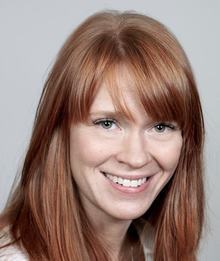
Emily Rapp Black
Emily Rapp Black is the author of the memoirs Frida Kahlo and My Left Leg (Notting Hill Editions), Sanctuary (Random House), The Still Point of the Turning World (Penguin), and Poster Child (Bloomsbury), as well as the nonfiction craft book I Would Die If I Were You: Notes on Art and Truth-Telling (Counterpoint). Her nonfiction has appeared in Vogue, the New York Times, LitHub, Die Zeit, The Times-London, The Sun, Time, the Boston Globe, the Wall Street Journal, O the Oprah Magazine, and the Los Angeles Times. She is a former Fulbright scholar and recipient of a Guggenheim Fellowship. She has taught at the University of California-Riverside and the UCR School of Medicine. She holds a BA from Saint Olaf College, an MTS from Harvard University, and an MFA in Fiction and Poetry from the University of Texas.
Read more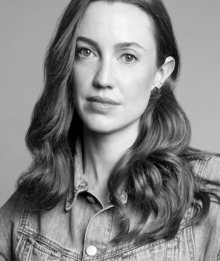
Genevieve Kingston
Genevieve Kingston is the author of the memoir Did I Ever Tell You? (Simon & Schuster), based on her New York Times Modern Love essay “She Put Her Unspent Love in a Cardboard Box.” Her produced plays include Café Utopia (Hudson Guild Theatre), Wild Home: Ohio River Valley (Notch Theatre Co.), Anna Karenina: a riff (Notch Theatre Co. at the Flea Theatre), and Past Perfect (Brown University/Trinity Rep). She has taught at Waterwell (at the Professional Performing Arts School in Manhattan). She holds a BA from the University of California-Berkeley, and an MFA from Brown University/Trinity Rep.
Read more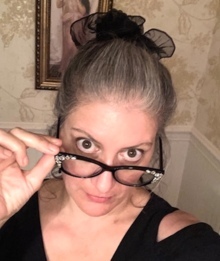
Lara Lillibridge
Lara Lillibridge is the author of the essay collections Hysterical Harlot: An Alphabetical Exploration of Sex, Gender, and Shame and The Truth About Unringing Phones (both Unsolicited Press), and the memoirs Mama, Mama, Only Mama and girlish: growing up in a lesbian home (both Skyhorse Publishing). Her essays and reviews have appeared in Hippocampus, Brevity, Whiskey Island Magazine, Crab Fat Magazine, River Teeth, Sunlight Press, and HuffPost, among others, and been anthologized in Getting to the Truth: The Craft and Practice of Creative Nonfiction (Hippocampus Books). She co-edited the anthology Feminine Rising: Voices of Power and Invisibility (Cynren Press). She has taught for Literary Cleveland and the Midwest Writers Workshop. Lara holds a BS from Southern New Hampshire University and an MFA in Creative Nonfiction from West Virginia Wesleyan College.
Read more
Nan Mooney
Nan Mooney is the author of the memoir My Racing Heart: The Passionate World of Thoroughbreds and the Track (HarperCollins), and the nonfiction books (Not) Keeping Up With Our Parents (Beacon Press) and I Can't Believe She Did That: Why Women Betray Other Women at Work (St. Martin's Press). Her nonfiction has also appeared in The Atlantic, the Washington Post,Slate, Motherwell, Alternet, and Babble. She holds a BA from Scripps College.
Read morehas published essays, articles, and poems in the New York Times, Line of Advance, Columbia Journal, Salt Hill Journal, Raffish, and the Journal of Military Experience, and been anthologized in The Weight of My Armor (Parlor Press). His essay “Threads of Fiction” was adapted into the short film Solemn Return. Formerly he was an editor for the Syracuse Peace Council Newsletter, the nonfiction editor of the Journal of Military Experience, and the online managing editor of Columbia Journal. He served as an artillery officer in the US Army overseas in South Korea and Afghanistan, deployed to Afghanistan a second time as a military intelligence officer, and was honorably discharged at the rank of captain. He is a cofounder and board member of the Ivy League Veterans Council, a cofounder of the Charlotte Veterans Writing Group, a cofounder of the Moral Injury Project at Syracuse University, and a former group leader of the Syracuse Veterans Writing Group. He holds a BA from Illinois Wesleyan University and an MFA in creative nonfiction from Columbia University.
is the author of the memoir Burying the Typewriter (Picador), the essay collection Poetry and the Language of Oppression (Oxford University), and the poetry collections Tristia, Time Being, Lillies from America, Releasing the Porcelain Birds, The House of Straw (all Shearsman Books), Sulla Soglia Della Dimenticanza (Kolibris), and Crossing the Carpathians (Carcanet Press), as well as the monograph Seamus Heaney and East European Poetry in Translation: Poetics of Exile (Routledge). Her poems and essays have appeared in the Irish Times, Harvard Review, the International Literature Quarterly, the Nieman Storyboard, and the anthologies Centres of Catacylsm (Bloodaxe Books), See How I Land (Heaven Tree Press), and Penguin’s Poems for Life (Penguin). She has taught at New York University in Abu Dhabi, Stony Brook University, the University of Michigan, Grand Valley State University, the University of Fribourg, the Geneva Writers’ Group, and Oxford University. She holds a BA from the University of Michigan, an MA in Creative Writing from Lancaster University, and a Master’s and Ph.D, both in English Literature, from Oxford University.
is the author of the memoirs Frida Kahlo and My Left Leg (Notting Hill Editions), Sanctuary (Random House), The Still Point of the Turning World (Penguin), and Poster Child (Bloomsbury), as well as the nonfiction craft book I Would Die If I Were You: Notes on Art and Truth-Telling (Counterpoint). Her nonfiction has appeared in Vogue, the New York Times, LitHub, Die Zeit, The Times-London, The Sun, Time, the Boston Globe, the Wall Street Journal, O the Oprah Magazine, and the Los Angeles Times. She is a former Fulbright scholar and recipient of a Guggenheim Fellowship. She has taught at the University of California-Riverside and the UCR School of Medicine. She holds a BA from Saint Olaf College, an MTS from Harvard University, and an MFA in Fiction and Poetry from the University of Texas.
is the author of the memoir Did I Ever Tell You? (Simon & Schuster), based on her New York Times Modern Love essay “She Put Her Unspent Love in a Cardboard Box.” Her produced plays include Café Utopia (Hudson Guild Theatre), Wild Home: Ohio River Valley (Notch Theatre Co.), Anna Karenina: a riff (Notch Theatre Co. at the Flea Theatre), and Past Perfect (Brown University/Trinity Rep). She has taught at Waterwell (at the Professional Performing Arts School in Manhattan). She holds a BA from the University of California-Berkeley, and an MFA from Brown University/Trinity Rep.
is the author of the essay collections Hysterical Harlot: An Alphabetical Exploration of Sex, Gender, and Shame and The Truth About Unringing Phones (both Unsolicited Press), and the memoirs Mama, Mama, Only Mama and girlish: growing up in a lesbian home (both Skyhorse Publishing). Her essays and reviews have appeared in Hippocampus, Brevity, Whiskey Island Magazine, Crab Fat Magazine, River Teeth, Sunlight Press, and HuffPost, among others, and been anthologized in Getting to the Truth: The Craft and Practice of Creative Nonfiction (Hippocampus Books). She co-edited the anthology Feminine Rising: Voices of Power and Invisibility (Cynren Press). She has taught for Literary Cleveland and the Midwest Writers Workshop. Lara holds a BS from Southern New Hampshire University and an MFA in Creative Nonfiction from West Virginia Wesleyan College.
is the author of the memoir My Racing Heart: The Passionate World of Thoroughbreds and the Track (HarperCollins), and the nonfiction books (Not) Keeping Up With Our Parents (Beacon Press) and I Can't Believe She Did That: Why Women Betray Other Women at Work (St. Martin's Press). Her nonfiction has also appeared in The Atlantic, the Washington Post,Slate, Motherwell, Alternet, and Babble. She holds a BA from Scripps College.
Related Courses
Essay & Opinion Writing I
Various types of viewpoint writing—essays, op-eds, reviews, and more.

Humor Writing
Prose writing with a humorous slant—fiction, memoir, essay, you name it.


Creative Nonfiction 101
A great entry point for the creative forms of nonfiction—memoir, essay, feature articles, reviews, etc.