Fiction Writing I
GUIDE TO FICTION COURSES

Fiction Writing I is a 10-week workshop, which includes lectures, exercises, and the critiquing of student projects. It’s for beginners or anyone who wants to brush up on the fundamentals. Farther down, you can view a syllabus for this course.
Also consider Gotham’s premium Zoetrope Fiction Writing classes: Zoetrope Fiction I or Zoetrope Fiction II.
Fiction is a wonderful conjuring act. With only words and the reader’s imagination, a work of fiction can sail across the world in pursuit of a whale, or time-travel to another dimension, or zero in on a few minutes in line at the local bank, enveloping the reader in a made-up story that feels real.
To pull off this feat requires a balance of craftsmanship, daring, and insight into human nature. Here you’ll learn the time-tested elements of fiction craft and how to market your work.
Whether you seek to write short stories or novels; commercial, literary, or genre; comic or tragic, we’ll show you how to spin your thoughts into believable and spellbinding tales.

This class was wonderful. I learned techniques for writing fiction that I never knew existed.
Donna Carpenter
publishing
Notes
Fiction I encompasses short stories and novels. After Level I, students have a choice of Short Fiction Writing II (focusing on short stories), or Novel II Critique or Novel II First Draft (focusing on novels).
If you’re working on “genre” fiction, you may take either a Fiction/Novel course or one of our genre courses: Science Fiction & Fantasy, Romance, Mystery.
If you’re working on a YA novel, you may take a Fiction/Novel or “genre” course, or you may take a Children’s Book course, where the full spectrum of children’s books will be covered.
Upcoming Classes
-
Deal du Jour! Register for $356.00
-
You can still enroll in this class.

 Starting a Class LateIt’s fine to start a class on the second week and you won’t be charged for the first week. We can’t catch you up on all that happened in the first week, but you can do the homework and review any handouts. Your teacher will know you’re coming and help you feel welcome.
10-Week
-
NYC
In-person
Tuition: $490 (returning students: $460)
-
Online
Anytime, week-long sessions
Tuition: $464 (returning students: $434)
-
Zoom
Real-time videoconference
Tuition: $464 (returning students: $434)
-
One-on-One
Tuition: $1895
Syllabus
This course gives you a firm grounding in the basics of fiction craft and gets you writing a short story (or two) or a novel. Course components:
Lectures
Writing exercises
Workshopping of student projects (each student presenting work two times)
New York City/Zoom classes
The syllabus varies from teacher to teacher, term to term. Many topics will be similar to those covered in the Online classes.
Online classes
Week 1
Introduction to Fiction: The different types and forms of fiction. Where to find inspiration and ideas. The importance of craft.
Week 2
Character: Where to find characters. Making characters dimensional through desire and contrasts. Creating character profiles. Showing vs. Telling. Methods for showing characters.
Week 3
Plot: Finding a major dramatic question. Shaping a beginning, middle, and end. The difference between short story and novel plots. Pros and cons of outlining.
Week 4
Point of View: POV defined. Exploration of the many types of POV.
Week 5
Description: Using the senses. Specificity. Techniques for creativity. Finding the right words. Merging description with point of view.
Week 6
Dialogue: The importance of scene. Dialogue's illusion of reality. Quotation marks and tags. Stage directions. Summarized dialogue. Characterization through dialogue. Subtext. Dialect.
Week 7
Setting/Pacing: Time. Place. Weather. Description of setting. Merging character and setting. How to manipulate time through pacing. Flashbacks.
Week 8
Voice: Voice defined. Exploration of the various types of voice. Tips for finding your voice. Understanding style—syntax, diction, and paragraph length.
Week 9
Theme/Revision: Theme defined. Types of theme. Weaving theme into a story. Exploration of the various stages of revision.
Week 10
The Business: Proper format for manuscripts. How to target publishing houses, literary magazines, and agents. Query letters.
Note: Content may vary among individual classes.
Teachers
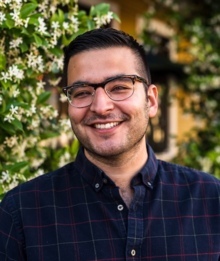
Aaron H. Aceves
Aaron H. Aceves is the author of the novel This Is Why They Hate Us (Simon and Schuster Books for Young Readers), and his short fiction has appeared in the Iowa Review, Passages North, the Florida Review, them, and Epiphany, among others, and been anthologized in All The Ways A Heart Burns: A Voyage YA Anthology (Discover New Art). He has taught for the University of Texas at Austin. He holds a BA from Harvard University and an MFA in Creative Writing from Columbia University.
Read more
David Berner
David Berner is the author of the memoirs Daylight Savings Time (O-Books); Walks with Sam, October Song, (both Roundfire) and The Consequence of Stars (Adelaide); the novels Things Behind the Sun (Adelaide) and A Well-Respected Man (Strategic); and the novella Sandman: A Golf Tale (Roundfire). His essays and short stories have appeared in Chicagoland Journal, Clef Notes, Epiphany, Eunoia Review, Longshot Island, Under the Gum Tree, and Write City. He is a reporter/anchor for WBBM Radio-Chicago and a contributor to the CBS Radio Network. He is the producer/writer of the audio documentaries NaNoWriMo (PRX/WRST Oshkosh, WI), Bracelets of Grace (Prairie Public Radio), and Finding My Kerouac (WFUV Radio, NYC). He teaches at Columbia College. He holds a BS from Clarion University, an MA in Teaching from Aurora University, and an MFA in Creative Writing-Nonfiction from Fairleigh Dickinson University.
Read more
K Hank Jost
K Hank Jost is the editor of A Common Well Journal. He is also the author of the novel MadStone and the novel-in-stories Deselections (both Whiskey Tit Books). His short stories and poems have appeared in Hobart, Vol. 1 Brooklyn, the Burning Palace, X-R-A-Y Lit Mag, and BULL, among others, and he is a regular contributor to the New Haven Independent. He has taught for the Brooklyn Center for Theatre Research.
Read more
Michael Backus
Michael Backus is the author of the novel The Vanishing Point (Cactus Moon Books), the memoir The Heart Is Meat (Oil On Water Press), and the chapbook Coney on the Moon (Redbird Chapbooks). His short stories and nonfiction have appeared in One Story, Okey Panky, Channel, Parhelion Literary Review, Jellyfish Review, Cleaver, Digging Through the Fat, Oyster River Pages, Prime Number, and Exquisite Corpse. He has taught at Columbia College and Marymount Manhattan College. He holds a BA from Purdue University and an MFA from Columbia College.
Read more
Quinn Adikes
Quinn Adikes has published fiction in Lit Hub, Five Points, Epiphany, the Palisades Review, the Berkeley Fiction Review, december, the Southampton Review, Shenandoah, and other journals. He taught for Stony Brook Southampton, where he also earned an MFA in Creative Writing.
Read more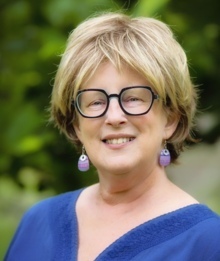
Susan Breen
Susan Breen is the author of the novels Merry (Alcove Press), The Fiction Class (Plume/Headline Review UK), and the Maggie Dove mystery series (originally published by Penguin Random House/Alibi and rereleased by Under the Oak Press). Her short stories have appeared in American Literary Review, the Chattahoochee Review, Alfred Hitchcock Mystery Magazine, and Ellery Queen’s Mystery Magazine, as well as the anthologies Best American Nonrequired Reading and Murder Most Diabolical, and she has won the Margery Allingham Short Mystery Competition. She holds a BA from the University of Rochester and an MA in Economics from Columbia University.
Read moreis the author of the novel This Is Why They Hate Us (Simon and Schuster Books for Young Readers), and his short fiction has appeared in the Iowa Review, Passages North, the Florida Review, them, and Epiphany, among others, and been anthologized in All The Ways A Heart Burns: A Voyage YA Anthology (Discover New Art). He has taught for the University of Texas at Austin. He holds a BA from Harvard University and an MFA in Creative Writing from Columbia University.
is the author of the memoirs Daylight Savings Time (O-Books); Walks with Sam, October Song, (both Roundfire) and The Consequence of Stars (Adelaide); the novels Things Behind the Sun (Adelaide) and A Well-Respected Man (Strategic); and the novella Sandman: A Golf Tale (Roundfire). His essays and short stories have appeared in Chicagoland Journal, Clef Notes, Epiphany, Eunoia Review, Longshot Island, Under the Gum Tree, and Write City. He is a reporter/anchor for WBBM Radio-Chicago and a contributor to the CBS Radio Network. He is the producer/
is the editor of A Common Well Journal. He is also the author of the novel MadStone and the novel-in-stories Deselections (both Whiskey Tit Books). His short stories and poems have appeared in Hobart, Vol. 1 Brooklyn, the Burning Palace, X-R-A-Y Lit Mag, and BULL, among others, and he is a regular contributor to the New Haven Independent. He has taught for the Brooklyn Center for Theatre Research.
is the author of the novel The Vanishing Point (Cactus Moon Books), the memoir The Heart Is Meat (Oil On Water Press), and the chapbook Coney on the Moon (Redbird Chapbooks). His short stories and nonfiction have appeared in One Story, Okey Panky, Channel, Parhelion Literary Review, Jellyfish Review, Cleaver, Digging Through the Fat, Oyster River Pages, Prime Number, and Exquisite Corpse. He has taught at Columbia College and Marymount Manhattan College. He holds a BA from Purdue University and an MFA from Columbia College.
has published fiction in Lit Hub, Five Points, Epiphany, the Palisades Review, the Berkeley Fiction Review, december, the Southampton Review, Shenandoah, and other journals. He taught for Stony Brook Southampton, where he also earned an MFA in Creative Writing.
is the author of the novels Merry (Alcove Press), The Fiction Class (Plume/Headline Review UK), and the Maggie Dove mystery series (originally published by Penguin Random House/Alibi and rereleased by Under the Oak Press). Her short stories have appeared in American Literary Review, the Chattahoochee Review, Alfred Hitchcock Mystery Magazine, and Ellery Queen’s Mystery Magazine, as well as the anthologies Best American Nonrequired Reading and Murder Most Diabolical, and she has won the Margery Allingham Short Mystery Competition. She holds a BA from the University of Rochester and an MA in Economics from Columbia University.